

Word-Of-the-Week #2028: Conversation
April 23, 2026 by Susan Clarke · Comments Off on Word-Of-the-Week #2028: Conversation
Conversation – the exchange of ideas, feelings, thoughts, and opinions.
How good are you at being an active listener? Have you ever made someone uncomfortable because you “overshared” information?
This week features the last half of, “11 Basic Manners That For Some Reason People Today Didn’t Learn Or Don’t Care About” Zayda Slabbekoorn at YourTango.com
To Recap:
- Respecting your elders
- Saying ‘please’ and ‘thank you’
- Not using a phone during a conversation
- Being respectful of shared space
- Saying ‘excuse me’
- Not interrupting
While interruptions and fast-paced conversations can sometimes feel friendlier in certain social situations, according to a Stanford study, most of the time, when we’re cut off by someone seeking attention in a conversation, we feel invalidated and annoyed.
It sabotages the flow of conversations and often rewards the most overconfident, loud people, as their voices are most prioritized. While screens and a desire for instant gratification are shifting social manners to some extent, because many younger generations struggle with basic social manners and etiquette from a lack of practice, it’s not surprising that this is one of the norms that’s less prominent in our interactions.
- Not one-upping in conversations
Status drives our modern culture, whether it’s defined by material things, money, or time. Many people have been socialized into seeking and prioritizing status above all else.
So, it’s not surprising that basic manners like humility in conversations are slowly disappearing. Whether it’s one-upping people sharing their success in conversations or bragging about everything from jobs to money, many people’s desire to feel valued and superior overlooks their care for basic humility.
- Returning shopping carts
While the tendency to return shopping carts at the grocery store has become some kind of unspoken social experiment, the truth is that it’s actually a sign of respect and decency. If you leave your cart in the middle of the parking lot, it doesn’t float to the designated area on its own. You’re essentially making someone else’s life harder for a minute of comfort.
It’s a selfish mentality that many people are adopting in all aspects of life, and is one of the basic manners that for some reason people today didn’t learn or don’t care about. It’s no wonder the etiquette people used to live by is starting to become less common and cared for.

- Not oversharing
While a few decades ago, kids and young people were taught to value privacy around taboo topics, personal issues, and vulnerabilities at home, the digital landscape today has turned that expectation on its head. Now, everyone has full access to overshare and seek attention from their phones, and it’s not shocking that this tendency has changed the way we interact with others.
Especially when so many people are lacking interaction and connection, this tendency to overshare, no matter how misguided it may be, allows people to seek a misleading version of vulnerability with others. They feel “seen” in some way and connected, even if oversharing ends up making people feel uncomfortable and emotionally burdened right from the start.
- Listening instead of waiting to talk
Our modern “age of selfishness” is incredibly nuanced and manifests in small ways across every aspect of our lives, but in conversations, it often urges us to seek the spotlight. Whether it’s bragging about our goals and accomplishments, interrupting someone while they’re speaking, or trading true active listening for a pause while you’re waiting to speak, our selfish motives are harming conversations.
While it might seem like a subtle, harmless shift, active listening makes people feel valued in conversations, but being with someone who’s only waiting to speak can feel like a competition. The art of simply supporting and letting someone else speak is a lost cause in many spaces, and is ironically sabotaging connection in a time when we need it most.
- Not canceling at the last minute
Our culture teaches young people to always put their comfort first, whether it’s at the hands of overbearing parents or a digital landscape that offers them immediate comfort and distraction when they’re feeling uncomfortable. So, when they’re not feeling excited or interested in something, “quitting” is their natural reflex.
Even in close-knit relationships, canceling at the last minute and trying to justify their disrespect as self-empowerment and “protecting their peace” is their new normal. However, it’s pushing people apart and making people feel isolated. Not everything has to feel personally rewarding or comfortable for it to be important. That realization could be the barrier many people face that’s keeping them from truly showing up for the people they care about.
This week’s focus is on conversation. How good are you at listening and not interrupting when others are sharing? Is it hard for you to let another person have the “limelight” and not compare your accomplishments? And for manners, how do you rate on the shopping carts? Are you like me and offer to take the cart for the person who just finished unloading it?
I LOVE feedback! Join my Facebook community on my FUN-damentals Fan Page.
WOW Word-Of-the-Week #409: Conversation
June 6, 2012 by Susan Clarke · Comments Off on WOW Word-Of-the-Week #409: Conversation
Conversation – a spoken interchange of ideas, thoughts, and feelings.
Do you prefer to pick up the phone when you need to communicate with someone? Do you prefer to text or email instead of calling? When was the last time you had a face-to-face conversation?
This week my attention was grabbed by an Associated Press article written by Martha Irvine titled, “IS TEXTING RUINING THE ACT OF TALKING? Many people seem to avoid face-to-face communication.”
“What difference should it make how we communicate, as long as we do? It seems that these days many people prefer texting over a phone call. And that is creating a communication divide of sorts – the talkers versus the texters. Some would argue that it’s no big deal.”
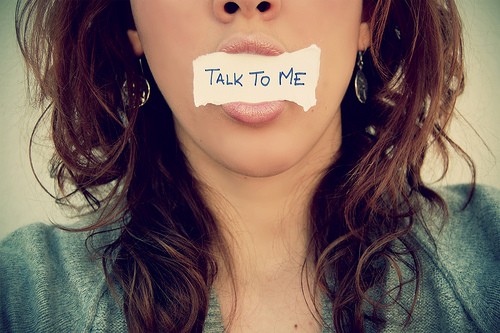
“But many experts say the most successful communicators will, of course, have the ability to do both and know the most appropriate times to use those skills. Traditional face-to-face conversations are vital in the workplace and personal relationships.”
Janet Sternberg, a professor of communication and media studies at Fordham University in New York says, “It is an art that’s becoming as valuable as good writing. I am noticing that more students don’t look me in the eye and have trouble with the basics of direct conversation.”
Do you have children or grandchildren that never return your phone calls? Do you think they are prepared or will be prepared to enter the “business world?” It seems the older you are the more likely you are to prefer a phone call. (And usually the person they will be working for will be older.) If conversations are vital to success in the workplace and personal relationships who is role modeling that behavior?
This week’s focus is on having conversations. Are you in a job where you are able to have conversations with your customers, guests, members, or clients? When was the last time you had a spoken interchange of ideas, thoughts, and feelings with a family member? Do you find it easy to strike up a conversation with a complete stranger?
Reader Responses
“Hi Susan, always great to get the WOW. In my personality testing service they rate applicants on Gregarious and Sociability. Those with high scores are the talkers and communicators. They make good first impressions on the customers and associates when they interact.” – Ken
“Conversation. The lively art. Toward the end of your piece you ask if I have a problem striking up a conversation with a stranger. I know there are times at sporting events where I will hear someone behind me that I have ever met talking about something in which I am interested. A lot of times I will simply chime in and give my two-cents worth. Quite often the other person will respond and we will have a nice conversation. One night I was at a basketball game by myself, when I heard two men behind me talking about some former Marquette basketball players. They enjoyed it when I chimed in with what I knew. When I introduced myself, one of the gentlemen was surprised that I was the same person who had written Al McGuire’s biography and asked me to sign his copy. You never know who you are going to meet anywhere. And we never know what doors it will open in our lives. As for phone conversations, I have noted in previous posts that we have a better idea of what the other person is thinking or feeling just by the tone of his or her voice. We can also tell by how short these people are with us that they want to end the conversation. Al McGuire pointed to the computer in his office one day and told me he had no idea how to operate. “You can’t get personality from a computer. My world is through the telephone.” There is something to be said about that. In our office I notice more and more communicating via emails, texts, tweets, etc., and less with the phone. Instead of calling me to let me know about a change of time in our meeting, my supervisor sent an email message – FROM HER PHONE! Go figure. I have always felt that conversations, either by phone or face to face, were the best way to communicate. But we all know how enamored of technology people are today, especially in the workplace. I would like to think that the young people coming up today will change, but many just can’t be bothered calling. Oh, well. The Baby Boomer generation, which is the largest demographic in the country, still prefers the phone. Maybe our generation will lead us back to basic conversation, which really brings out ideas and innovations, as well as feelings.” – “Warrior” Joe