

Word-Of-the-Week #1020: Frivolous
February 22, 2024 by Susan Clarke · Comments Off on Word-Of-the-Week #1020: Frivolous
Frivolous – not serious; playful.
When was the last time you were playful? Or the last time you looked up to the stars with wonder?
Once again, Neil Senturia has written a profound article Why having fun is good for the soul. Particularly for the entrepreneur — when the world is in a serious state of flux — there is a deep need to embrace those moments that amaze and delight.
“How are you feeling?
Series B financing going well, the board loves you, no homeless people camped in your parking lot, excited about the election choices, revenue ramping up, marriage is solid, climate change is a non-issue, just got back from Davos and life is fantastic?
For the 99.7 percent of us for which that is not true, we need a reset, we need some fun, some laughter, some delight. We need to stop, wonder at the universe, and remember that money doesn’t buy happiness. (Actually, studies show that it really helps, but your parents didn’t tell you that for fear that it would stifle your ambition.)
Meet Catherine Price, author of “The Power of Fun.” She teaches delight. “Making a point to notice and share things we find delightful can improve our moods, outlooks, relationships and our physical health.” She wants us to be “frivolous.” She contends it will help us live longer.
I like the use of the word delight. I believe in laughter. At this time, I think that particularly for the entrepreneur when the world is in a serious state of flux, there is a deep need to embrace those moments that amaze and delight.
As a first step Price argues for disconnecting from social media, but that is not enough. The next step is to allow yourself to be dazzled, to be amazed. When that happens, it makes you smaller, it centers you and maybe it even lets you laugh at yourself.
My normal response to fascinating stuff is to say “wow.” I have a bit of the child in me, and I want to suggest that a combination of gratitude and delight can actually be effective in running your company or just surviving in the company in which you toil.
I know there is a touch of corny here — you know the “look up at the stars and wonder” moments — but Price makes a great argument for what she calls “savoring, the practice of deliberately appreciating positive life experiences.”

Now there are several kinds of delight. If you have been tossed on the hot coals by your venture capitalist who said “no mas,” you can take a bit of comfort in some data, namely 38 percent of VCs disappeared in 2023.
I don’t think Price is advocating schadenfreude, but rather she wants us to elevate our own spirits, raise our ratio of joy to misery and seek wonder. Along the way, seek “playfulness, connection and flow.”
I like the idea of playful. That does not mean more game apps, but instead trying something goofy. My granddaughter made me a paper crown, and I wore it watching a football game. I think it helped the Chiefs win that day.
Price likes the word “marvel.” I know that is easy to do that when you read about the latest and greatest health care cancer cure genomic AI, but I am going to try to embrace baseline marvels — like electricity.
As many of you know, I am a passionate follower of magicians, magic tricks and conjuring. I know the same card cannot be in two places at the same time, but there it is. How can that be?
Barbara and I went to the Mat Franco magic show in Las Vegas. It was fabulous, and right before the conclusion of one of the tricks, I turned around and looked at the audience. Their mouths were open. It was wonder. The reveal and then came massive applause. That was the moment when they gave it up. They were transported.
I know that the startup racket can be brutal, but a few moments outside yourself might yield new insights. At worst, it should make you smile.
Finally, please indulge me while I beat my favorite drum — why people do stupid things.
Case in point: Joe Lewis, 86-year-old British billionaire, just couldn’t help himself. He was found guilty of insider trading. “I knew that what I was doing was violating a legal duty, that what I was doing was wrong.” His fine was $50 million and possible time in the slammer.
His net worth at the time was $6.1 billion.
So you risked prison and your reputation to make even more money and “to give some tips to your friends, employees and romantic interests.”
Joe, when is enough, enough?”
Rule No. 796: “For a Few Dollars More” – Sergio Leone
This week’s focus is to be frivolous. What do you do to elevate your spirits? When was the last time you felt amazed, dazzled or delighted? How would it feel to “savor” and deliberately appreciate your positive life experiences?
I LOVE feedback! Join my Facebook community on my FUN-damentals Fan Page.
Word-Of-the-Week #1019: Character
February 15, 2024 by Susan Clarke · Comments Off on Word-Of-the-Week #1019: Character
Character – attributes that determine a person’s moral and ethical actions and reactions.
Are you aware of what your best character traits are? Is there someone that you admire?
Steve Strauss, author of STEVE’S 3-MINUTE COACHING, once again has great insight to share.
Great Question: Character Trait?
(Great questions lead to great answers; weak questions, weak ones.)
“What do I consider to be my best character trait?”
Coaching Point: Very few people are introspective enough to ask this Great Question of themselves. Fewer still have a clear answer. Those who do have a distinct advantage in life over those who don’t.
Socrates pointed out the benefits of “Know thyself.” More to the point is the downside of not knowing what you’re made of.
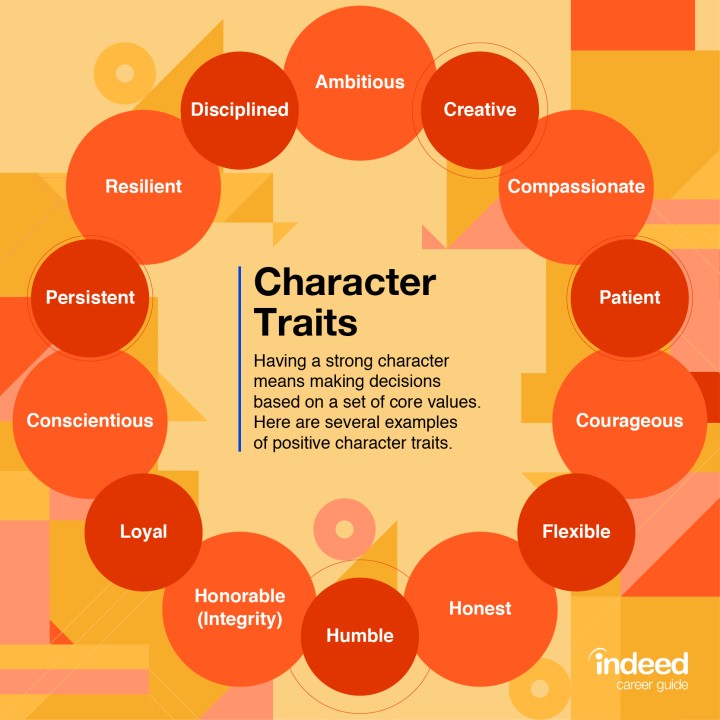
Would anyone expect a good and consistent outcome from cooking a dish without a recipe? Or painting a painting in the dark? Or raising fully functioning children without teaching them some core values for life success? (Well, sadly, yes to that one.)
What keeps us from being willing, eager even, to discern our best character trait? And that is ‘discern’ not create. By the time we look inward our life formula is pretty well set. Rarely does someone later in adulthood create a new character trait from whole cloth.
How about this? Take a considered look at people you admire. Whether you know them up close and personally or at a distance. The key feeling is ‘admire.’
What character traits do they exhibit? Not just talk about, exhibit. Which of those traits float to the top of your list? If you admire it, it probably already exists in you.
Which one is it? Which is your best character trait?
See all past issues and subscribe here Steve’s 3-Minute Coaching
— Copyright 2024 Steve Straus. All rights reserved. —
This week’s focus is about character traits. Of all the people that you admire how many of them have the same character traits? Have you ever thought about how many of those traits you have too?
I LOVE feedback! Join my Facebook community on my FUN-damentals Fan Page.
Word-Of-the-Week #1018: Beauty
February 8, 2024 by Susan Clarke · Comments Off on Word-Of-the-Week #1018: Beauty
Beauty – the qualities that delight the senses and that give pleasure.
Are you fully aware of those things that delight your senses and that give you pleasure?
This week features another article from The Better Newsletter by Sam Horn.
ANECDOTE
“My friend Glenna was married to Jim, a former linebacker for the Green Bay Packers, who loved being out on the lake.
He bought a really big boat for waterskiing that wouldn’t fit in their driveway, so he parked it in their backyard.
And there it sat… For months. For years.
Glenna said that every time she looked in the backyard, there was that darn boat.

Finally, one day she’d had “enough.” She got all worked up and pronounced, “Either that boat goes or I go.”
Her husband looked at her and asked a simple question: “Glenna, what percentage of our relationship, in your opinion, works?”
She thought about it. “Eighty percent.”
“I agree. So, let’s focus on the 80 percent that does work instead of the 20 percent that doesn’t. Sound good?”
She agreed … and then went out and bought a really big rosebush.
Bada boom.
Glenna solved her problem by looking out at beauty (instead of the boat), and she and Jim had many (mostly) happy years together.
ACTION
- How about you? Are you looking at the beauty or the boat in your life?
- Grab your journal and reflect on these questions:
- Is there a way to reframe the situation?
- What resources will I need to remedy the situation?
- Is it my job to “fix” this?
- Does someone need to be held accountable and am I that someone?
- Will time heal this problem?
This week’s focus is about being able to find the beauty. Are you able to create beauty in your life even when things aren’t to your liking?
I LOVE feedback! Join my Facebook community on my FUN-damentals Fan Page.
Word-Of-the-Week #1017: Mistake
February 1, 2024 by Susan Clarke · Comments Off on Word-Of-the-Week #1017: Mistake
Mistake – the result of defective judgment, deficient knowledge, or carelessness.
Have you ever had a lapse in judgment that caused you to lose a promotion, a raise, or your job? Have you ever been accused of “resting on your laurels?” Do you have a tendency to complain about your work situation?
This is the sequel to Travis Bradberry’s article “Career killers – Even small mistakes can be costly in the workplace.” To recap he wrote, “Little things can add up over time and undermine your career just as much as one huge lapse in judgment. Stay aware of these blunders before they creep up and kill your career:
- Having an inflatable ego – Did you ever work with someone who had a string of successes and started thinking that he or she was a star? Success is great. It definitely boosts your career, and it feels really good. The problems start once you let it go to your head. You start thinking that success is going to last forever and that you’re entitled to it.
Never, ever be content with resting on your laurels.
- Losing sight of the big picture – It’s easy to become head-down busy, working so hard on what’s right in front of you that you lose sight of the big picture. But smart people learn how to keep this in check by weighing their daily priorities against a carefully calculated goal.
It’s not that they don’t care about small-scale work; they just have the discipline and perspective to adjust course as necessary.

- Negativity – Sometimes when you’re feeling negative and down, your mood can leak out and affect other people. People who spread negativity through their department and complain about the work or other people complicate things for everyone else.
If people always have to tiptoe around you so as not to risk poking the bear, they are unlikely to be willing to do it for very long.
- Low emotional intelligence – Everyone knows that you can get fired for being unable or unwilling to play nicely with others, but what trips up a lot of people is having a poorly developed poker face. If everyone can tell when you’re bored or irritated or that you think something a colleague says is stupid, this will catch up with you.
Emotional outbursts, belittling others, shutting co-workers down when they speak, low self-awareness and just generally being difficult are other ways that a lack of emotional intelligence will do great harm to your career.
- Playing politics – Working hard to build strong work relationships is very different from instigating conflict, choosing sides, undermining colleagues, spreading rumors and all of the other things that fall under the umbrella of “playing politics.” If you find yourself feeling embarrassed about any of your tactics, you likely are playing politics.
Stick to strategies you’d be proud to discuss in front of your colleagues.
This week’s focus is about not making mistakes. How good are you at weighing your daily priorities against carefully calculated goals? How easy are you to work with? Do you work hard at building strong work relationships?
I LOVE feedback! Join my Facebook community on my FUN-damentals Fan Page.
Word-Of-the-Week #1016: Complacent
January 25, 2024 by Susan Clarke · Comments Off on Word-Of-the-Week #1016: Complacent
Complacent – satisfied with the current situation and unconcerned with changing it, often to the point of smugness.
Are you currently working in the job of your dreams? How long has it been since you proactively learned a new skill? How easily are you able to adapt to changes?
Travis Bradberry is the co-author of “Emotional Intelligence 2.0” and co-founder of TalentSmart, a San Diego provider of emotional intelligence tests and training. “Career killers – Even small mistakes can be costly in the workplace” is this week’s focus. Travis writes,
“There are many things that can kill people’s careers, and even small mistakes often carry serious consequences down the road. We usually only hear about the most egregious examples, but most people don’t go down in a blaze of glory; they kill their careers in subtle, decidedly undramatic ways. A recent survey by VitalSmarts found that 83 percent of respondents had seen someone make a blunder that had catastrophic results for their career, reputation or business, and 69 percent acknowledged they had done something that damaged their careers. Of those:
31 percent said it cost them a promotion, a raise or a job.
27 percent said it damaged a working relationship.
11 percent said it destroyed their reputation.

Little things can add up over time and undermine your career just as much as one huge lapse in judgment. Stay aware of these blunders before they creep up and kill your career:
- Over-promising and under-delivering – It’s tempting to promise the moon to your colleagues and your clients, especially when you’re hardworking and believe that you can do it. The problem is that there’s no point in creating additional pressure that can make you look bad. If you promise to do something ridiculously fast and you miss the deadline by a little bit, you’ll likely think that you did a good job because you still delivered quickly. But the moment you promise something to someone, they expect exactly that.
You end up looking terrible when you fall short, which is a shame, because you could have done the same quality work in the same amount of time with great results if you’d just set up realistic expectations from the beginning.
- Complacency – How long has it been since you proactively learned a new skill, reached out to your networking contacts or even polished your resume? If you can’t remember, you might have become a bit complacent, and complacency is a real career killer.
If you’re always too busy to learn something new or to expand your network, you’ve got your priorities mixed up. However, if you make continuous growth and development a priority, you’ll be ready for whatever comes your way.
- Fear of change – Fear of change is complacency’s evil twin. It actively works to keep things the same. I’m sure you’ve seen this one first hand at work when someone uttered the dreaded words, “But we’ve always done it this way.”
Things are changing too fast these days to latch on tightly to the status quo, and the costs of doing so can be huge. Surveys show that managers find that the most successful employees are the ones who can adapt to the changing workplace.”
This week’s focus is to not be complacent. How often do you reach out to your networking contacts? When was the last time you polished your resume? Are you ready to tackle whatever comes your way each day?
Stay tuned – next week will feature 5 more Career Killers!
I LOVE feedback! Join my Facebook community on my FUN-damentals Fan Page.